Latest Post

Marion Bartoli thrashes Sabine Lisicki to win Wimbledon title

Written By Unknown on July 7, 2013 | 7/07/2013

One of the strangest Wimbledons produced one of its quirkiest champions in Marion Bartoli, the winner of a final that had the overwhelmed runner-up in near tears during the match.

Bartoli, whose power game bothered Sabine Lisicki as much as any of her notable eccentricities, won 6-1, 6-4 on Saturday to capture her first Grand Slam title in her 47th appearance at a major.

"I dreamed about this moment for so long," Bartoli said during her on-court interview.

She addressed Lisicki, who was shaking and in tears.

"I was there in 2007 and I missed it," said Bartoli, the runner-up to Venus Williams that year. "I know how it feels, Sabine, and I'm sure you will be there one more time. I have no doubt about it."

Indeed, the 15th-seeded Bartoli played the part of the experienced veteran. After losing serve with a pair of double-faults in the first game, she ticked off 11 of the next 12.

The 23rd-seeded Lisicki was trailing 5-1, 15-40 in the second set, then came up with a rally from out of nowhere - unexpected considering she was almost weeping on the court minutes earlier.

"I was just overwhelmed by the whole situation, but credit to Marion," Lisicki said. "She's been in this situation before and handled it well."

Lisicki saved three match points and pulled within 5-4.

But after a tense changeover, Bartoli served the game out at love, dropping to her knees after hitting an ace on match point, then climbing up the wall into the players box to celebrate with 2006 Wimbledon champion Amelie Mauresmo - the last Frenchwoman to win a Grand Slam title - and her friends and family.

"Maybe a backhand winner but just not an ace," Bartoli said when asked how she imagined she might close out her first Wimbledon title. "I've been practicing my serve for so long. At least I saved it for the best moment."

This was Bartoli's first tournament title of any sort since 2011 and, at 28 years, 9 months, she became the fifth-oldest first-time Grand Slam winner in the Open era.

She's awkward - with a jumping, twitching, fidgeting routine before each point, a service motion that includes no bouncing of the ball and a windup that begins with crossed wrists before she uncoils by arching her back, stretching her unbent arm behind her head, then tossing the ball.

She hits two-handed groundstrokes from each side, pumps her fist after almost every point.

Whatever it is, it works. She punished those groundstrokes, had no problem with Lisicki's serve, which reached as high as 115 mph, and undercut the notion that only Serena Williams can play the power game in women's tennis.

It was Lisicki who knocked Williams out of this tournament in the fourth round, and had the big serve and big groundstrokes to keep going to her first career Grand Slam final.

Under the bright sunshine and the glare of Centre Court, however, she lost complete control of her serve, her game and her emotions.

After hitting her second serve into the bottom of the net while serving down 3-1 in the second set, Lisicki could be seen stifling tears as the pressure of her first Grand Slam final caught up with her.

She did the same during the changeover, gesturing at her coaches before briefly draping a towel over her head.

Only then did she gather a bit of composure, staving off the three match points and briefly making a match of it.

Despite the loss, she'll make about $1.2 million - not bad for a player with career earnings of $2.8 million to this point.

Bartoli gets a $2.4 million winner's share and caps off a lifelong quest.

"Maybe all the candles I've burned have helped me," she said. "It's been my dream since I was 6 years old."

Source: http://to.ly/mjER

As Narendra Modi prepares Bihar speech, ex-BJP minister joins JD-U

Former BJP minister Ramji Das Rishideo on Saturday joined Bihar's ruling Janata Dal-United (JD-U) in the presence of Chief Minister Nitish Kumar, party leaders said.

It is the first time a senior Bharatiya Janata Party leader has joined the JD-U in Bihar after Nitish Kumar dumped the party last month.

Rishideo was a minister in the first BJP-JD-U government led by Nitish Kumar. "I joined the JD-U to work for development of Bihar," he said.

Some JD-U leaders have claimed that more than a dozen BJP leaders are in touch with the JD-U and they will soon join the party.

Modi will address Bihar's top BJP workers using teleconferencing on Saturday.

5 things to watch out for in a home agreement

You may have gotten a home loan approved after zeroing down on a house you want to buy, thinking half the work is done and hoping for smooth processing here on. Think again, because once you complete these formalities, you will have to protect your dream from the legal traps your builder might throw your way.
There are a few very important points to consider when you are about to enter into an agreement with a developer.

Here we will take a look at 5 such points you need to remember and also various measures you can take against them.

Actual price of the house

A home agreement details various costs that you will need to bear for buying the house. This would include the cost for utilities like electricity, water, parking space, many kinds of taxes, and in some cases even registration charges. However, the builder may then levy extra charges for any of these.

Tips

  • Check the agreement thoroughly for all applicable charges.
  • If possible, get the agreement checked by a lawyer for hidden charges and get the anomalies (if found) rectified by your builder.
  • If a builder charges extra for altering the original plan, you can always ask for the sanction letter provided by government authorities for such changes.
Actual size of the house

Your agreement would clearly mention the size of the house you are purchasing. However, there would be a clause stating "plans, designs, specifications are tentative and the developer reserves the right to make variations and modifications". Therefore, you may agree for a certain size but the builder can give a different size.

Tips

  • Before going ahead with a builder of your choice, do some research about the builder's past projects.
  • If possible, talk with other buyers (who have already gotten possession) about problems faced by them.
  • Try and include a clause in the agreement stating the minimum and maximum size beyond which the builder cannot increase or decrease.
Carpet area

The area of an apartment or building excluding the area of walls is known as carpet area. This is the area in which literally a 'carpet' can be laid in your house. When the area of walls, including the balcony, is calculated along with the carpet area, it is known as built-up area. The built-up area along with the area under common spaces like lobby, lifts, stairs, garden and swimming pool is called super built-up area.

Carpet area can be 15-30 per cent less than super built-up area. However, you will not come to know the exact size until the constructions have been completed.

Tips

  • Purchase a property based on its carpet area.
  • Ensure that this area is mentioned in the agreement.
  • Try to get a clause included which will ensure that the contract can be terminated if the builder provides a house with the carpet area lesser than what is mentioned in the contract.
Date of possession

The agreement normally mentions a tentative date of possession. However, there have been instances where builders have delayed possession by more than a year.

Tips

  • Check the progress of the construction from time to time personally.
  • On finding that the progress is slow and the construction is not going to finish by the date of possession, you can always pressure on your builder.
  • Forming a society with other buyers sometimes helps a lot in getting things to speed up at the builder's end.
Completion certificate

On handing over the house to you, the builder also needs to provide you with a completion certificate. This is issued by municipal authorities that establish the building complies with its approved plan. You would need this certificate for the registration of your house and other government formalities.

Tips

  • If the agreement does not mention the certificate, ensure that the agreement has a clause which states that the builder will provide the certificate while handling over the house to you.
  • If your builder delays a lot, putting pressure on the builder along with buyers like you is a good idea.
Besides, there are a few more points - such as the quality of the construction, management of the society - which one should clarify before entering an agreement with a builder. For this, you can try to add clauses to the agreement or form a society to get the builder to meet your demands. Since there is no industry regulator you can turn to any issues you may face during the course of buying your home, it is important that you are aware of what you want and what you are getting.

Disclaimer: BankBazaar.com is an online loan marketplace. All information in this article has been provided by BankBazaar.com and NDTV Profit is not responsible for the accuracy and completeness of the same.
Source: http://profit.ndtv.com/news/your-money/article-5-things-to-watch-out-for-in-a-home-agreement-324145

Online real estate business likely to grow: experts

Mumbai: With a rising number of property portals entering the market, the online real estate business is expected to improve gradually as these websites bring transparency by providing high quality information about projects, according to industry experts.

Property portals are increasingly becoming a tool for research on buying, selling and leasing residential or commercial properties in many parts of the country, as the amount of information listed on these sites is increasing.
"By increasing the quality and quantity of information available to end-users, we attempt to bring in greater transparency to the entire gamut of buying/selling properties. It is our constant endeavour to increase the amount of information listed about a particular property and to avoid spam or incorrect listings," Magicbricks.com business head Sudhir Pai told PTI.

According to experts tracking the realty sector, sites such as Magicbricks.com, 99acres.com, Makaan.com, IndiaProperty.com and CommonFloor.com are fast becoming the choice of consumers looking for renting a property, as well as for developers.

"The online real estate market is yet to reach an inflection point as seen in the travel or e-commerce sector. However, with the penetration of internet more and more consumers in the urban areas have started using this medium as the first point of search for all their real estate needs," HomeShikari.com chief executive P Sunder said.

Currently, the size of the property portal market is around Rs. 250 crore going by the topline of some of the listed portals in the country.

This market is expected to grow at a compound annual growth rate (CAGR) of 50-100 per cent in the coming years, mainly on the back of increased focus on this medium of communication by buyers as well as developers. This model also helps decision-making faster for buyers.
"The internet and consequently the evolution of e-mail, the company website and the onset of property portals has transformed communication between the developer and potential customer radically and for the better," Poddar Developers managing director Rohit Poddar said.

It has led to the democratisation of information in the real estate space and evolved as a significant communication tool with the customer. Besides, it is highly cost-effective," Mr Poddar added.

However, Devang Varma, director of Omkar Realtors and Developers, said that though such portals bring transparency, they work best for small ticket transactions only.

"Marketing property through web platform helps in reaching out to a large size of consumers who are keen on instant product information," My Varma said.

"Internet has evolved as one of the crucial platforms in sharing information to clients. For engaging your audiences, it is an extremely transparent channel. But these work best in low size transactions between Rs. 10 lakh an Rs. 80 lakh," he said.

In the relatively high ticket size property, this channel becomes rather ineffective, Mr Varma maintained.
Source: http://profit.ndtv.com/news/industries/article-online-real-estate-business-likely-to-grow-experts-324162

This child serial actor has stars in her eyes

Written By Unknown on July 6, 2013 | 7/06/2013


A little girl with shy eyes and a charming smile, Harshhitha is excited about turning eight this September. She is very cute, but then so are a lot of other children. What makes her extraordinary? Well, for starters, she is barely seven and has already acted in four Kannada serials, with talks on to even cast her in a film. She has acted in serials such as Manedevru, Atmakathe, Crime Files and Panchamaveda.

She began acting at five, and the very mention of acting lights up her jet-black eyes. “Acting is a lot of fun,” she says. She got her break on television in Manedevru that was telecast on Udaya TVand it remains her favourite till date. Her performances were highly appreciated by the audiences as well as her director, she proudly recounts. She has not forgotten her first stepping stone, even as she has progressed to other serials. When asked if she remembered any of her old dialogues, she shyly replied, “I remember all from Manedevru.”

Harshhitha is currently working in Panchamaveda. She usually goes to the set after school hours and the shooting often goes on till about midnight. But the hardworking little girl is not complaining. “I love being the youngest one on the set... I am pampered by everyone,” she grins.

She is the first in her family to take to acting and here parents are proud of her. Her mother, Usha, took her to her first audition and both of them haven’t looked back ever since. “I was very scared for her first audition. But she acted effortlessly and bagged the role,” she recalls.

“We allow her to choose what she wants to do. We cannot promise her a lot of resources but she certainly has our support and encouragement,” says her father, Umesh G.C., a head constable. She has not received any formal training for acting yet but her parents, gauging her interest, are planning to send her to an acting school soon.
What has changed in their lives since Harshhitha started acting? Her mother responds: “My daughter is still the same. The only difference is that now people recognise her on the streets or in the shops.”
The little girl is fond of a number of other things out of which Maggi and ice-cream top her list. She loves the world of science, not for its wonders but for its diagrams. She loves drawing too.

Does she want to become an artist or scientist if acting doesn’t work out? She shakes her head. As much she likes science and drawing, acting is where her heart and soul lie. The world of “lights, camera, action” is where she wants to be.

Her favourite actors are Darshan and Shah Rukh Khan, and she dreams of working with them someday. My, she has certainly got ‘stars in her eyes’. 

Over 6,600 educated women given ‘gold for making thali’

Social Welfare Minister P. Valarmathi launching the free gold scheme for women for the current fiscal on Friday. Photo: Special Arrangement
Gold weighing 26.460 kg was disbursed to beneficiaries under the State government’s 4 gm gold scheme for educated women on marriage, here in the district. Cash disbursements of Rs. 33.66 crore were made under the scheme. Over 6,615 women had benefited from the free gold scheme in the last fiscal here.

Launching the free gold scheme for educated, poor women on marriage, Minister for Social Welfare P. Valarmathi said the scheme was conceived to encourage families to educate their girls and increase their self-worth. The scheme had made tangible difference to the lives of poor women and has given them a sense of dignity, the Minister said. 

The current fiscal envisages a targeted 2,049 beneficiaries to benefit under the scheme. This would entail 8.196 kg gold and Rs. 8.78 crore disbursements under the scheme. 

According to the Minister for Fisheries K.A. Jayapal, families had been encouraged to educate their girls and at the same time ensure some form of asset for women at the time of marriage. 

The event witnessed disbursements of fixed deposit cheques on their maturity to children orphaned by tsunami. 
-->

‘AMMA helps public access administration’

The AMMA scheme has taken the Revenue Department closer to the public, especially the rural populace, who are now getting the required certifications expeditiously and easily, said Revenue Minister Thoppu N.D. Venkatachalam.

Participating at a special AMMA scheme camp here on Friday, Mr. Venkatachalam pointed out that sections of society had always felt difficult getting the much-needed Revenue Department certifications as the government machinery required its own time to deliver them to the applicants. 
The trouble for the unlettered and the semi-literate people in the rural areas, who were always vulnerable to government procedures, was far greater than those in the urban sectors.
Seeking to do away with delays and difficulties, the State government devised the scheme that aimed at ensuring maximum benefits to rural populace expeditiously. Since its implementation, the AMMA Scheme had been a hit with the applicants and the public had come to appreciate speedy disposal of applications by the Revenue Department, he said.

Noting that the department was the fulcrum of governance and held the key to development in almost all spheres, farmers especially were dependant on the numerous certifications issued by the department regarding pattern of land holdings.

Mr. Venkatachalam said the scheme had done away with the perceived glass walls separating the administrations and the public in more ways than one.

Transport Minister V. Senthil Balaji said the scheme was a boon to farmers and the rural people as they could get the department work done at their doorsteps as regular camps were being held at the panchayat level throughout the district. 

12,000 acres of land okayed for manufacturing zone in Tumkur

CEOs and Chairpersons of Industry at CII's National Council meet looking at Chief Minister Siddaramaiah's Speach on monitors.
Two such zones planned in Kolar and Gulbarga, says Chief Minister Siddaramaiah

Chief Minister Siddaramaiah said on Friday that the government has approved the allocation of 12,000 acres of land for a National Investment and Manufacturing Zone (NIMZ) at Tumkur.

“We plan to set up two more NIMZs in Kolar and Gulbarga districts,” he told an interactive session organised by the Confederation of Indian Industry’s (CII) National Council here.

Referring to the need for developing industries outside Bangalore, he urged the CII to partner the State in developing Mysore as a “major investment destination”.
Advocating the need for a “cluster-based approach” to industrialisation, Mr. Siddaramaiah urged industry houses to set up clusters in Belgaum, Hubli-Dharwad and Mysore.
Mining lease

The Chief Minister said that fresh mining leases would only be issued to companies that would “add value” within Karnataka. Responding to a query from B. Muthuraman, Chairman, Tata Steel, Mr. Siddaramaiah said the government will decide on the allocation of leases that became available for reissue following a Supreme Court order in April. “We are going to take a decision on this (the allocation of leases) soon,” he said.

Mr. Siddaramaiah said that gas supplies from Dabhol, transported by GAIL India’s pipeline, would 
enable Karnataka to become a “power-surplus” State in a few years.

CII president S. Gopalakrishnan urged Mr. Siddaramaiah to enunciate an exclusive State policy for renewable energy. 

India ends subsidy on kerosene, LPG supply to Bhutan

India has withdrawn its subsidy on kerosene and cooking gas to Bhutan, putting the Himalayan kingdom in a crisis, said a newspaper report on Saturday.

According to the report, prices of the two fuels have risen sharply in Bhutan as result of the decision and its government has written to India's External Affairs Minister Salman Khurshid on the issue.

It is not known why India took such a step, but there is speculation that the move aims at apparently punishing the Bhutanese government for hobnobbing with China.

The country's Prime Minister Jigme Thinley recently met his Chinese counterpart Li Keqiang in Brazil's capital Rio de Janeiro and imported 20 buses from the other neighbour.

The report, quoting a state-run Indian Oil Corporation official, said the subsidy was ended after the government said it would not reimburse the subsidy component of kerosene and LPG.

Read more at: http://indiatoday.intoday.in/story/india-ends-subsidy-on-kerosene-lpg-supply-to-bhutan/1/287208.html

Sale of SIM cards without ID proof, a real danger

As retail sellers ignore security measures, threat to national security looms large

Greed and ignorance of retail sellers of mobile SIM cards pose a threat to national security now.
The city and district police units have come across retailers selling SIM cards of a mobile phone operator without verifying the identity of the buyers.
They do not bother to collect copies of photographs, proofs of identity and address, which are mandatory to hand over SIM cards.

Only last month, the city police arrested a man and his son, running a retail shop at Narimedu, for selling SIM cards, ignoring these security precautions.

The concern of the police that easily available SIM cards could be misused/abused by criminals proved right in the recent kidnap of a Rajasthani youth, Rahul Singh.

When the police tried to trace the culprits through the mobile phone numbers they used to demand a ransom of Rs.10 lakh, they failed.

For, a retailer in Munichalai had sold the two SIM cards without collecting the mandatory documents, Inspector of Police (Avaniyapuram) R.Uma Shankar said.

“The shopkeeper had ignored the security feature and given the SIM cards by collecting extra money,” he said.

Stating that mobile phone tracking had made it easier for the police to locate criminals, the Inspector wondered what would happen if retailers allowed anyone to get SIM cards without checking his documents.

The police said in the case of the retail seller of Narimedu, the SIM cards were sold to unknown persons by misusing documents submitted by buyers of SIM cards.

“They had also sold activated SIM cards. This means the subscribers need not wait for a couple of hours to get their SIM cards activated,” the police said.

The police added that any person could use the SIM cards to make obscene calls, threatening calls or nuisance calls.

However, it could become more dangerous when those cards land in the hands of anti-social elements or hard-core criminals.

“Anti-social elements could smuggle these SIM cards into prisons for use by convicts. Even if the authorities manage to intercept the calls, they will not be able to trace the culprits,” a city police officer said.

Another officer said the SIM cards could also be used as a remote-controlled device to explode bombs. 

Will the authorities ensure a fool-proof system to monitor issue of SIM cards?

Movie review: Lootera may not be epic, but it’s worth a watch

I walked into the theatre to watch Lootera, ready to be wildly irritated by Sonakshi Sinha in a Son of Sardaar/Rowdy Rathore-esque reprise and a wretched mess of a story. The thing about being such a judgmental movie-watcher, however, is that you run the chance of being pleasantly surprised every once in a while.

It’s 1954. In a fictitious Bengali town of Manikpur, an evening of entertainment is interrupted when the local zamindar’s (Barun Chanda) daughter, Pakhi (Sonakshi Sinha), has a terrible coughing fit. She’s rushed to her room—which takes ages because their house is so big—given a shot of medicine and waited on by her doting father, who sits by her side fanning her till she wakes up again, recovered.
He then tells her a story of a king who was indestructible because he hid his life in a parrot. So long as nothing happened to that parrot, no one could touch him. But when the parrot was found and killed, (spoiler alert) the king died as well. Pakhi is his parrot, the zamindar tells his daughter. The quiet intensity of this story (much more enjoyable when you don’t have to read the abridged version in a movie review), sets the tone for the film.

Enter Varun (Ranveer Singh), an archaeologist who comes seeking the zamindar’s permission to excavate in Manikpur because he suspects there may be an ancient civilisation below. Not only is he given permission to excavate the hell out of their premises, but also welcomed to stay in the zamindar’s house. So he moves in with a friend and colleague (Vikrant Massey).

Vintage Ranveer Singh is gorgeous. Pakhi thinks so too. Somewhere between stolen glances, whispers, art classes and asthma attacks, the pair fall in love. This bit is especially lovely. As they observe each other from afar, too shy at first to make any obvious moves, you in the audience get involved too: staring at a door too long, waiting for Varun to walk in, or him to look up at Pankhi when her eyes are boring into his face (be warned, she does this a lot).

There isn’t really anything substantial that happens to warrant an intense relationship, but you’re willing to let this pass because everything on screen looks so arty, old world and beautiful that you don’t want to ruin it for yourself.

But all this is the obvious calm before the storm. A little into the second half, those familiar with O Henry’s short story (one of my personal favourites) The Last Leaf, will work out how the film ends. Those who are not, get to enjoy Lootera on an extra level. But this is the also the bit where the film—which started slowly, languidly, with no apparent rush to get caught up in any drama—starts to falter, trip into loopholes, and give you enough reason to question the basis of this particular couple’s love for each other.
Lootera is a quiet love story, more passionate in its whispers and silences than when the cleverest dialogue is uttered. The silence and subtlety hang around through the film, whether we’re watching our lead pair falling in love, fighting, or seeing our hero smack in the middle of a chase sequence across town. Surprisingly restrained and effective performances by Sinha (finally, congratulations), Singh (yay!) and the supporting cast, great sets, beautiful cinematography and near-perfect sound design (hello again, Amit Trivedi) all work to make a strong case for your continued patience to stay with the film till the end, even if it does take its own sweet time to come around (and even if it may have slightly tainted one of your favourite O. Henry stories).

Is it more lasting and evolved than Motwane’s Udaan? This I have yet to decide. In the mean while, make a trip to the theatre; it may not be epic, but it’s definitely worth a watch.
Source: http://to.ly/mgOq

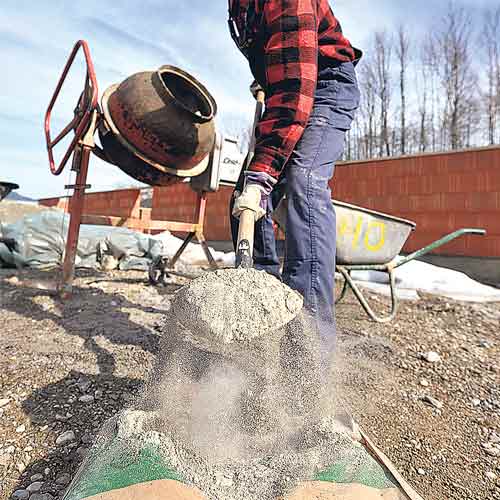
Cement prices sag, may fall further

Cement prices declined across the country in the last fortnight except in South despite efforts by manufacturers to arrest price fall ahead of the lean monsoon season.

Prices fell Rs 10-20 per 50-kg bag in the last 10 days of June after rising Rs 5-25 per bag between May-end and early June in northern, eastern and some pockets of western India, according to a pricing trend report by Motilal Oswal Securities.

The demand too remains sluggish in most regions and may worsen in the next one month due to monsoon. Prices are likely to fall further due to weakness in demand.

Jinesh Gandhi, vice-president - research (cements), Motilal Oswal, said in the report that after rising till mid-June, prices on a month-on-month basis in north and east were down by Rs 8-15 per bag.

“However, central India posted relatively lesser volatility, albeit exit prices (June-end price) were down by Rs 10-15 per bag. Markets in west – Mumbai and Nagpur – remained mostly stable though Pune and Ahmedabad saw strong swing during June. Raipur (east) and Bhopal (central) showed stable to marginal increase in prices,” he said.

Cement firms generally raise prices ahead of monsoon as June to September is a lean period for sales.

In Pune, after rising by Rs 10 in May, prices went up by another Rs 20-25 in June. However, in the second fortnight of June, they fell by Rs 20.

Prices fell Rs 40 per bag to Rs 225 in Ahmedabad, before rising to Rs 260-265 per bag due to production discipline, which, some dealers said, was about 30% by Tier I players.

According to the report, mid-June prices of Tier II/ outside brands (like Wonder cement) went down to as low as Rs 197 per bag in Ahmedabad.

In Delhi, Jodhpur and Chandigarh, prices were down Rs 5-10 per bag. After Rs 15-20 per bag increase in May, Delhi and Jodhpur saw another increase of Rs 10 per bag in June before reversing by Rs 20 per bag in the last couple of weeks.

Contrary to the declining trend, markets in south India (the first to hike prices) saw cement prices either remain stable or increase.

“Prices in AP were up by Rs 90-100 per bag over past 45 days, led by production discipline. AP dynamics impacted the adjacent markets positively with Bangalore and Chennai seeing Rs 15-20 increase,” said Gandhi.

Some dealers from central and eastern parts see good harvesting season boosting rural demand, he said,

“Overall, while visibility remains weak for the near term, medium-term demand outlook has optimism with several infrastructure/power projects underway,” he said.
Source: http://to.ly/mgMr

Politics

 
Support : Johny Template | Mas Template Copyright © 2013. Mr.Golmaal - All Rights Reserved
Template Created by Creating Website Published by Mas Template
Proudly powered by Blogger