Latest Post

Japan's bad education

Written By Unknown on August 31, 2013 | 8/31/2013

Under the current education system, Japanese students devote most of their effort to memorizing facts needed to pass exams. Even kindergarten students sometimes go to afterschool cram schools to prepare for elementary school entrance exams.

They have little opportunity to think critically or develop their own ideas. Faced with crushing stress and monotony, students often act out. While outside observers tend to think of Japanese schools as academically successful, the Japanese themselves have long understood their educational system's shortcomings and tried to fix them-albeit unsuccessfully.

In the early '70s the Japan Teachers Union, alarmed by a surge in classroom violence, bullying, truancy and suicides, began to push a new system known as yutori, or breathing space. It aimed to reduce school-related stress by giving students the freedom to freely exercise their imagination, develop intellectual curiosity and grow into valuable talent.

That was a noble goal, but the result was quite the opposite. Many teachers demonized competition, suppressed individuality, punished intellectual rigor and encouraged mediocrity in the name of egalitarianism. At school sports events, students who could sprint faster had to stop and wait so that everyone could cross the finish line hand-in-hand. Textbooks were dumbed down-the mathematical constant pi was reduced to just "3"-and classes trudged at turtle pace, adjusting to slow learners.

In order for the yutori reform to succeed, teachers needed to establish an environment where students could freely ask questions, express their opinions and explore new ideas. But many teachers failed to do so because they did not know how to encourage individuality while avoiding favoritism. Their solution: force everyone to act the same.

via http://newsonjapan.com

Mirror, mirror on the wall: Using the face to read one’s fate

Official poster for the upcoming film “The Face Reader”
Some people turn to psychics or crystal balls to learn their future, but many Koreans believe that all they need to see what lies in store is a mirror.

Fortune-telling has a longstanding history in Asia dating back thousands of years, yet it is not necessarily perceived as a pastime practice or mere hocus pocus folklore. Many methods of fortune-telling such as tarot card and palm reading are still a common practice in Korea ― not only among the elderly, but among young people as well.

However, aside from cards and palms, phrenological interpretation or fortune by face reading is a practice that not only determines one’s personality traits purely based on analyzing facial features: The complexities of one’s face are said to be able to determine one’s future.

“The Face Reader” is an upcoming Korean film set in the Joseon era (1392-1910) starring Song Kang-ho as Nae-gyeong, the son of a disgraced noble family, whose talents in physiognomy (known as “gwansang” in Korean) lands him in the middle of a Royal Court murder investigation. Nae-gyeong is asked to use his skills of reading people’s faces to catch the murderer as well as personally assist the king in identifying traitors.

Everyone’s face is unique. It is thought by some fortune-tellers that different aspects of the face cover different areas of the personality, and that race, culture and ethnicity are irrelevant in terms of the methods and the techniques of determining one’s fate.

In many Western cultures, there is a common perception that looking into one’s eyes can tell a lot about one’s character ― eyes are the windows to your soul. However, according to fortune-tellers in Korea, it is not the eyes, but rather the ears that actually tell the most about a person.

“Since you listen to others with your ears, you can tell through looking at the ears whether or not a person is spiteful or good-natured and if they are respectful to other’s opinions,” said Lee Heon, fortune-teller at the fortune-telling establishment Goonghap Story. “You can also tell whether they are strongly opinionated … even whether or not they have a good sex life.”

The nose, on the other hand, represents the self. For example, the nose is thought to represent a person’s ability to earn money. Therefore, the higher the bridge of one’s nose is, the more money they are expected to earn.

Contrary to popular belief, according to the practices of phrenological interpretation, one’s destiny is not set in stone and can be altered. But although some who find bad fortune may seek to change their future’s path by fixing their outer appearance, this has little to no effect on the core of one’s fortune, Lee said.

“Changing one’s outward appearance by surgery does not completely change a person’s fate, because just like trimming off a few leaves from a tree doesn’t have an effect on the roots itself, surgery is only changing the outside,” said Lee. “I have never in my career recommended anyone to get plastic surgery in order to change their fortune. One can always change their fate by personal effort.”

Unlike tarot card reading, which takes years of experience and study in the field in order to properly read someone’s fortune, anybody can learn the techniques of phrenological interpretation and be able to read a person’s face, according to fortune-teller Kim Moon-jeong.

“In face reading there is something called the ‘12 gung,’ which is a guide to how we tell one’s fortune and personality through different parts of the face,” said Kim.

For example, “myeong” is the space between the eyebrows and represents luck and hope while “nojogung” is the chin and represents what a person’s job is going to be, or what they will be doing when they are older.

“The central part of a person’s forehead represents the person’s relationship with their parents,” said Kim. “Right below the eyes, called the ‘namnyeogung,’ represents children, relationship between men and women and even one’s kidney health.

“The harmony of the features on one’s face is the most important for good fortune,” Kim explained. “Someone could have a very lucky nose, but if it is out of balance with the other features on their face, they can’t properly receive all of the blessings.”

There are no set guidelines or rules that clarify a certain-sized nose, a particular face shape, hairline or any facial features that are considered the most “ideal” or said to bring the greatest fortune to a person. But rather it is on an individual and case-by-case basis that is determined by the proportions and symmetry of one’s face that create a balance.

“I can often just look at a person’s expression, feel their energy, and gain the majority of information about them,” said the fortune teller. “The face is the ‘cave of the spirit’ and we can see what kind of life someone has lived just by looking at a person’s face.”

via http://www.koreaherald.com

"U.S. intervention in Syria will be a disaster for the region," Supreme Leader Ayatollah Ali Khamenei

Ayatollah Ali Khamenei
President Hassan Rohani's election victory in July was widely seen as an opening for improved relations between Iran and the United States. Rohani took a relatively moderate position on policy issues during his campaign, pledging to improve ties with the West and try a different approach in negotiations over Iran's contentious nuclear program.

That was welcomed by Iranian voters keen on seeing international economic sanctions lifted, and by many U.S. lawmakers open to talks that could prevent Iran from developing nuclear weapons.

Patrick Clawson, director of research at the Washington Institute for Near East Policy, says a U.S. intervention in Syria would considerably complicate such efforts.

"A military strike is likely to highlight the serious differences between the United States and Iran about developments in Syria," Clawson says. "That is more likely than not to complicate matters for reaching an agreement between the United States and its international partners with Iran about the nuclear impasse."

'A Disaster'

In turn, Iran's continued backing of the Syrian government, its main regional ally, could abruptly end any talk of lifting economic sanctions. This is because military intervention in Syria would be retaliation to a toxic gas attack the West believes was carried out by Syrian President Bashar al-Assad's forces.

"It would be very difficult for the United States to agree to a lifting of sanctions on Iran if Iran is perceived as providing vital support to a regime that uses chemical weapons," Clawson says.

The Iranian leadership has denounced possible military action against the Assad government, which is also a lifeline for the militant Shi'ite group Hizballah, Iran's proxy in neighboring Lebanon.

"U.S. intervention will be a disaster for the region," Supreme Leader Ayatollah Ali Khamenei said in addressing Rohani's cabinet on August 28, according to state television. "The region is like a powder keg; its future cannot be predicted."

Any fallout from U.S. military action in Syria would depend on the extent of the intervention, Clawson says. The repercussions of surgical strikes against specific regime targets will complicate matters less than an ongoing U.S. campaign to oust Assad.

Especially Sensitive

Rohani has taken a more cautious approach. He has condemned the use of chemical weapons in Syria, without placing blame, while joining Russian President Vladimir Putin in an August 28 telephone call stressed the need for a peaceful resolution to the crisis.

But in keeping with Iran's hard-line position, General Masoud Jazayeri, deputy in chief of Iran's armed forces, on August 26 warned that any U.S. intervention in Iran would be a "red line."

"The U.S. is aware of the limit of a red line in the Syrian front, and any crossing of the Syrian red line will have severe consequences for the White House," he was quoted as saying by Iran's Tasnim news agency.

Many observers doubt that such consequences would include military retaliation by Iran. The issue of chemical weapons hits close to home in Iran, who had forces and civilians gassed during the 1980-88 Iran-Iraq War, and the thinking is that Tehran would not respond with force to a brief and targeted strike.

But any military action would strengthen the position of Iran's hard-liners, who oppose talks with the United States and could drown out voices of moderation within Iran if Syria is attacked.

In order to protect its interests in Syria, Iran's leadership could opt to step up clandestine efforts in Syria by creating new proxies or calling upon existing groups such as Hizballah to fight for its interests.

"I would make it very difficult for him to call for greater relations with the West in the short term," Ghanem Nuseibeh, founder of the London-based political risk-analysis group Cornerstone Global Associates, says of the immediate political impact for Rohani.

"One of his main mandates, as far as international policy is concerned, becomes undermined as a result of really not being able to sell to the hard-liners in the government the importance of greater or closer relations with the West."

via Payvand News

Court on a bus in Taliban-hit Pakistan

Sweat pours down Judge Fazal Wadood’s back as he sits behind a desk inside a custom-built green bus that is the latest weapon in the battle against Taliban influence in Pakistan.

The $98,000 vehicle, whose striped awnings make it more reminiscent of a giant fast food van than an arm of the state, allows Judge Wadood to preside over Pakistan’s first mobile court.

Boasting a portrait of Pakistan founding father Muhammad Ali Jinnah — and an air conditioner that struggles to fend off the intense summer heat — the bus is designed to go directly to the people, resolving their daily disputes in some of the most remote and dangerous parts of the country.

The aim is to cut down the backlog of cases in ordinary courts dating back years — a situation that has bred frustration, fuelled support for the Taliban and increased calls for Islamic sharia law at the expense of the government.

It is part of a $15 million project — 25 percent bankrolled by the government in the northwest and the rest by international donors — to strengthen the judicial system and state institutions.

Musarat Shah, a 72-year-old widower locked in a five-year land dispute, is one of the first on board the bus, which has the white crescent and star of the Pakistani flag emblazoned on its side.

“Justice delayed is justice denied,” says Shah, furious with the slow pace of the regular court system.

“Multiple commissions were held. One commission finished and demanded another commission, and it was taking us nowhere.”

Wadood summons a group of mediators, who agree to go off and inspect her land, then sets another hearing for a week’s time.

Shah, exhausted and slightly baffled, appeared to reserve judgement on whether the new court would actually help.

The bus has been set up by the high court in the northwestern province Khyber Pakhtunkhwa, where a six-year Taliban insurgency is concentrated, and the UN Development Programme.

“Strengthening the judicial system and the legitimacy of state institutions is one of the main ways to counter the influence of non-state actors,” Marc-Andre Franche, the head of UNDP in Pakistan, told AFP.

Eight judges and 18 lawyers have been trained in conflict resolution to find quick solutions in simple cases that risk dragging on for years, clogging up the creaking judicial system.

On one day — with the bus stationary in a car park in the Hayatabad suburb of Peshawar — Wadood together with a registrar and stenographer tapping away on a laptop, handled nearly 30 cases.

“Our work is speedy mediation between two parties in property conflict, family problems and other problems we face in daily life,” says Mohammed Osman Khan, chairman of the arbitration council.


But the mobile court faces major challenges if it is to succeed and authorities are to decide whether it is worth rolling out further courtroom buses.

One is the jirga system, traditional gatherings of tribal elders who typically mediate similar disputes at a local level.

Human rights organisations criticise their decisions as arbitrary which, for example, can include women being given away in marriage.

Hayat Ali Shah, director of the judicial academy in Peshawar, believes the two systems can operate side by side.

“A civil litigation in KPK (Khyber Pakhtunkhwa) comes to the court only when jirga and all efforts have failed. So hopefully there will be no competition,” he told AFP.

He is hopeful that the bus initiative can take off.

“If you plant a beautiful tree in your lawn and it produces very fine fruits, so everybody living in the neighbourhood… will request a branch to plant in his lawn. So if this bus gives good results, I hope we will have many other buses,” says Shah.

But it remains unclear how many villagers will opt for the mobile bus rather than the traditional jirga system, and if so how quickly.

The other major complication is security. So far, the mobile court has limited its work to the suburbs of Peshawar. Even there, an armed police escort is necessary.

Taliban-led insurgents carry out near daily gun and bomb attacks in the northwest that have killed thousands in recent years.

The authorities are trying to agree on extra security precautions for when the bus travels to more dangerous parts of the northwest, away from the heavily protected city of Peshawar.

But Wadood, for one, is not afraid of death.

“The law and order situation in our country is the worst now but… there are also problems of security in the (normal) judicial complex, so we don’t fear to work here or there,” he said.

via http://tinyurl.com/p6b8lan

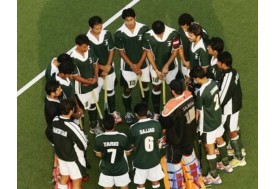
Darkest Day in Pakistan Hockey

Karachi: Pakistan s former hockey Olympian Shahnaz Sheikh said that Pakistan s exclusion from the World Cup on Friday, after the green-shirts lost to Korea 2-1 in Asia Cup semifinals in Malaysia, is the  Darkest Day  in Pakistan hockey history.

The green-shirts needed a title triumph in Asia Cup to salvage Pakistan s glorious past and secure a place in the World Cup. But a 2-1 defeat from Korea in semifinals, has dashed all hopes for Pakistan of reaching the World Cup. The World Cup 2014 edition will miss the green-shirts for the first time since its inception in 1971.

It is the  Darkest Day  in the history of Pakistan hockey. We have been the pioneer of the most important spectacle of hockey, where we reached the finals for six times and clinched it four times. It is very depressing for me to think of Pakistan not being the part of next year s World Cup,  Shahnaz Sheikh lamented.

Shahnaz said that the semifinal match against Korea exposed our team s poor planning and management.

Pakistan was favorite in the match because Korea has not been at its best. Korea started defensive but our team never took advantage of it as there were no proper planning and management,  Shahnaz said.

He further said that Pakistan had the possession of the ball of around 57 percent and yet they failed because the team played under pressure and they were not properly led.

Pakistan wasted their energy early in the match and Korean side exhausted our team. The management should have directed our players properly so that they could have put a proper show throughout the match,  he said.

Shahnaz recalled that the former Olympians raised a hue and cry after Pakistan ended at the bottom-rock 12th place in the 12-nation World Cup in 2010 but no one listened to them.

When we protested against the team s lowly performance in 2010, no one listened to us. And now, after three years, team s performance has fallen instead of improving, so it must be concluded that we had been right in our demands then,  Shahnaz said.

If we had been listened after 2010 World Cup debacle, then the whole nation didn t have to face this day,  he said.

via http://pakistan.onepakistan.com.pk

8 Issues to Think About Before Bombing Syria

There are eight main issues that the West should consider before bombing Syria:

1. What are the intervention goals?

All statements coming from Western leaders — particularly the U.S., Britain and France — suggest a narrow focus on chemical weapons rather than action designed to sway the overall trajectory of the conflict in Syria. Beyond a perceived sense of the need to "do something," the intention seems to be to send a signal on chemical weapons to deter further use in the Syria arena and reinforce a global norm alongside an apparent goal of restoring Western credibility. Washington, in particular, seems to have been convinced that if it takes no action on its own "red line" threat, it would be a sign of weakness and send a signal that it has replaced a gung-ho policy with a gun-shy one.

Less than 1 percent of casualties in Syria are even being attributed to chemical weapons claims. If there is a plan involving military action to reduce the suffering of Syrians and improve the situation, then presumably that would be aired irrespective of proof of chemical weapons use.

Nevertheless, any action will have consequences well beyond the chemical weapons issue, so any proposed action should also be measured against broader criteria of prospective implications for Syria and broader regional issues, including sectarian escalation, refugee flows and instability in Iraq and Lebanon, radicalization and diplomacy with Iran.

2. The chemical weapons dilemma

The West will try to influence the military balance in Syria if there is a strike, but there is a danger that the options under consideration could make the situation worse in Syria, in the region and for the prospects of crisis management diplomacy.

If chemical weapons have been used in Syria, preventing its further use doesn't suggest that Syrian casualties will be reduced, given that at least 99 percent of deaths are not attributable to chemical weapons.

3. The problem with evidence

Western powers may now be convinced beyond reasonable doubt that the Assad regime has deployed chemical weapons. Yet that determination has not been made in a sufficiently robust way. It must at least be taken seriously and acknowledged that there is a degree of conviction with which some non-Western actors are making a counter case — whether that be in Russia, China, Iran or elsewhere in the region and the world, notably on a who-benefits basis.

The suggested irrefutability of the Western claim is undermined by the fact that United Nations inspections have not had sufficient time to determine who might have used chemical weapons in Syria. It is worth remembering that the UN inspectors on the ground — a development that the West pushed for hard at the UN — are ostensibly in Syria to review claims of chemical weapons use from five months ago. Western leaders would therefore appear to be on shaky ground in claiming that an investigation of chemical weapons use from five days ago is too little, too late.

4. The legality challenge

In addition, the legality of military strikes against Syria in the absence of authorization by the UN Security Council is questionable at best. There does not appear to be any basis to claim that military action is being undertaken in self-defense. While the use of chemical weapons undoubtedly violates international law, this does not mean that a coalition of countries has the right to take punitive action without the authorization of the UN Security Council. Therefore, the only possible legal basis for action lies in the disputed notion of humanitarian intervention.

Whatever legal arguments are advanced, an attack on Syria would inevitably fuel the belief around the world that Western powers are willing to act outside the Security Council when they wish. Military action would help reinforce the international norm against the use of chemical weapons but arguably undermine the norm against the use of force without Security Council backing. Every time that Western countries bypass or act outside the Security Council, international legality and collective security is undermined.

5. The military dynamic of Western intervention

The signals from Western leaders suggest that any military action would be limited in scope and duration. But it will be difficult for Western powers to limit their strikes to being one-off. It can also be self-defeating if the goal is to deter and restore credibility.

What if Syria uses chemical weapons again? The Syrian opposition, whose main goal for a long time has been to draw in Western military intervention, would do everything to make claims of new atrocities and to provoke Assad.

6. Impact on the trajectory of the Syria conflict

The conflict can get worse for Syrians, even more destabilizing for the region and can generate new threats to Western security.

The regime has not yet unleashed all the firepower it has. The rebels will undoubtedly see this as an opening to a more extensive Western military intervention and will calibrate their actions and public relations efforts accordingly.

In terms of domestic opinion in Syria, the Assad regime does not benefit when U.S. missiles are dispatched from offshore locations and appear over their skies, especially if there are civilian casualties.

Finally, how will this impact the flow of refugees? There is already a devastating refugee crisis that is stretching the coping mechanisms of neighboring states. The possible impact on the refugee situation cannot be a secondary consideration.

7. Impact on the region

The current Western debate on Syria is taking place in the absence of a broader strategic conversation on prioritizing what matters most for Western interests in the Middle East. The default position is to place the emasculation of Iran as the top priority item, despite growing evidence that the greatest threat from the region is a cycle of sectarian escalation with Syria at its core. This sectarian violence is fueling radicalization, threatening to increase the level of anti-Western jihadism across the Greater Middle East.

An attempt to rethink Western powers' Middle East policy should therefore focus on a strategy, the center point of which should be regional de-escalation, requiring more, not less, diplomacy with those with whom the West disagrees, notably Iran and Russia. It is hard to see how a military escalation can serve this goal. But it is easy to see how it would further squeeze the space for sectarian de-escalation.

8. A diplomatic alternative

Until now, most Western policy debate has navigated between military-lite and diplomacy-lite options. Military-lite is what is under consideration now, but pushing harder on diplomacy is what the West should be doing.

In the immediate term, a diplomatic alternative might include working to expand the UN mandate for chemical weapons inspectors. Pushing Russia on this issue will play to an area in which Russia might be highly defensive about. Russia's position is stronger in opposing military force. The West should insist on obtaining clearer evidence on chemical weapon use in advance of further discussions at the Security Council. This would build on the positions that Russia, China and Iran have taken against chemical weapons use to push Assad on inspectors.

via: The Moscow Times

Northern Railway Line in Sri Lanka tested before next month`s opening

Sri Lanka Railways (SLR) authorities today conducted a test run on the Northern Railway Line which is currently being re-built from Vavuniya to Kankasanthurai, in Jaffna peninsula.

The train left the Omanthai railway station at 9.30 this morning and it reached Kilinochchi railway station at 10.10 a.m. Sri Lanka Railways sources said.

The train ran on the newly built track up to a speed of 100 km per hour.

The last passenger train on this line ran on January 19, 1985. Tamil Tiger terrorists bombed the Yal Devi train at Kokavil on that day killing 34 people and destroying the train tracks. The attack effectively ended the north-south rail transport.

Sri Lanka will officially launch the train service on the Northern Line up to the former rebel stronghold on September 14, Ministry of Transport announced.

President Mahinda Rajapaksa will launch the train service to Kilinochchi and he will also declare open the newly built Kilinochchi Railway Station.

Kilinochchi was the capital of the de facto state run by the Tamil Tiger terrorist outfit Liberation Tigers of Tamil Eelam. The Sri Lankan Army captured Kilinochchi in 2009.

Minister of Transport Kumar Welgama and other Ministers as well as the senior officials of Ministry and Sri Lanka Railway are to participate in the ceremony.

Sri Lanka`s Northern Line from Vavuniya to Kankasanthurai in the northernmost tip of the island was completely destroyed by the Tamil Tiger terrorists during the three-decade long war. The rebels uprooted the rail tracks to build reinforced underground bunkers.

The train line is now being reconstructed by the India Railway Construction International Ltd. (IRCON) with the assistance of the Indian government.

Currently the trains operate only to Omanthai, ten kilometers north of Vavuniya. The construction of the whole Northern Line up to Kankasanthurai would be completed by the end of 2014 and all the previous railway stations which were destroyed in the three decade war are to be reestablished, the Ministry says.

via http://www.lankanewspapers.com

Indian Government launches data website for public

On the lines of the USA and the UK, the union government on Thursday launched an open data website, where information on various sectors like health, transport, sanitation and agriculture was made available. The website, data.gov.in, has been developed by the National Informatics Centre (NIC). Currently, it hosts over 3,500 data sets from 49 government departments which everybody is free to access and use.

Some of the released datasets include "State-wise recorded forest area of the country", "Gross irrigated area", "District-wise release of funds from centre share upto 31st March 2013" and more. Over 1,000 of the available datasets pertain to agriculture alone.

"Government is not the sole proprietor of data. All forms of data must be shared, barring those that are important for security. There is also a responsibility on those who use and interpret this data. They must realize that it is for development," said Kapil Sibal, union minister of communications and information technology, at the launch event. Sam Pitroda, who joined via videoconference, said this project could help implementation of services at district and panchayat level.

A contest organised by the NIC and the National Association of Software and Services Companies (NASSCOM) is in the offing too. Called the"#OpenDataApps Challenge", it invites entrepreneurs, start-ups, and people from civil society to create apps using this data. Participants can send in entries by August 20 to compete for three first prizes worth Rs. 1 lakh each and three second prizes of Rs 50,000 each.

Earlier this year, the Planning Commission had organized a hackathon in the country, inviting apps using similar data sets. Web developer Guneet Narula, who had participated and won in the hackathon, feels that this data.gov initiative is a "step in the right direction".

"The hackathon was just a starting point. This has a different objective. As a developer, I may not be able to see how two data sets relate. With a team where there are people who can analyse it that way, it may have useful results," says Narula.

Kantanu Kundu, CEO of a2z apps says he wishes the government would come up with an API (Application Programming Interface) as well. "That would excite app developers who want to use such data," he says.

A similar website called data.gov.uk shares UK government data with the public. It was launched in 2010. The US has had a data.gov website since 2009. 


via TOI

Botswana: Women Wearing Trousers Denied Access to Police Station

Gaborone, Botswana — Bokaa is a village located approximately 50 kilometres from Botswana's capital city, Gaborone. Like many other villages in Botswana, Bokaa has a chief commonly referred to in Setswana as Kgosi, and each chief has a traditional gathering place known as the Kgotla.

Traditionally, Setswana culture does not allow women and girls to enter the Kgotla wearing trousers or pants, and requires them to wear dresses and skirts. Most Batswana observe this rule with great respect and accept it as common cultural practice across the country.

I have been attending meetings at different Kgotlas around the country since I was ten-years-old. Having the utmost respect for Setswana culture, I can confidently say that I have never entered a Kgotla wearing trousers.

However, in Bokaa the chief's Kgotla and office are located in the same compound as Bokaa's only police post (station). Although there is a fence and independent gate separating the Kgotla from this station and other government offices, women are prohibited from visiting the premises wearing trousers, and are often sent back home if they are wearing anything other than a dress or skirt.

I was recently working on one of the Bokaa Westland farms assisting in building a pit latrine for an elderly woman. As anyone would expect, I was wearing overalls, the most practical attire for the somewhat arduous and grubby task. Due to my involvement in crime prevention initiatives in the area, Bokaa's Police Commander called me, requesting I come to his office for a brief meeting.

It was already dusk so I had to head straight to the police post, in order to return to the farm before dark. On arrival, Bokaa's Chief, Kgosi Sue Mosinyi, met me with disproval and was very upset to see me wearing trousers. I tried to explain to him that I was not going to the Kgotla, but instead on my way to the police post for a meeting with the Commander.

Chief Mosinyi remained indifferent, proceeded to ‘pardon' me and gave me a stern warning never to show up there again wearing trousers. I was shocked and incredulous, as I had never experienced such an unreasonable response from any other chief.

However, in Bokaa this has been an on-going contention. In a similar incident last month, I was part of an all-night patrol with the police and other volunteers, many of whom are women. The day before the patrol, we had a long debate with officials explaining it would be both impractical and too cold to patrol wearing dresses and skirts. Our reasoning was overruled and they forbade us from entering the premises wearing trousers.

This rule forces the female Cluster Police volunteers from Bokaa Police Post to carry out their daily duties wearing skirts and dresses, because they have to meet every day at that premises before dispersing into the village to patrol. However, Chief Mosinyi has made an exception for the official and permanent female police officers, by permitting them to enter the premises wearing trousers because “it is part of their uniform.”

Concerned about these restrictions, I had a meeting with Chief Mosinyi. I asked him why this rule, which traditionally applies only to the Kgotla, is problematically extended to public spaces and law enforcement offices that should be accessible to anyone at all times, regardless of their attire.

Although I emphasised that a fence clearly separates the offices from the Kgotla, he explained, “The Kgotla, his office and the police offices are one and the same thing”, adding that as the Chief it is his duty to preserve our culture and to ensure that females remain and behave like females.

He went on to explain that he also makes exceptions for women in emergencies, and other women recognised as outsiders, who do not reside in the village. Chief Mosinyi said he is especially strict with female villagers and sends them back home if they show up wearing trousers, because they are well aware of this practice in his village.

However, his justification is not only inadequate for me, but also problematic for many women who have the right to unrestricted access to the premises.

Firstly, the glaring problem is that it restricts women's access to Bokaa's only police post. This poses some serious problems in a country with high rates of domestic violence and rape, low rates of reporting, where victim blaming is rife and where domestic violence is often dismissed and trivialised as a ‘family issue'. Women residing in Bokaa are undoubtedly aware of this cultural practice, but are they aware of their constitutional rights, and that the undue extension of this practice impinges on these rights?

I hold the Kgotla in high regard, as I believe it is one of the oldest forms of democracy that maintains peace in my country. I can respect the rule that prohibits me from entering the Kgotla, but I cannot accept it when this rule is extended to public spaces, especially spaces that people seek out for security and protection. It is unreasonable, unjust and discriminatory.

Bokaa's Chief and others across the country need to recognise the physical boundary that separates the public offices from the Kgotla as well as the boundary of tradition. Either the premises allow for appropriate and equitable access, or the police and government offices must move elsewhere.

When custodians of culture impose their own biases, and when these practices disproportionately hinder the human rights of others, the meaning of our culture and democratic rights are undermined. This applies to many customary laws that persist across SADC solely in the name of tradition, but contribute to the persistence of gender inequality. A cultural practice that denies my equal rights, because I am a woman, is unconstitutional.

Gogontlejang Phaladi is a philanthropist, youth ambassador, motivational speaker, activist, writer and founder of the Pillar of Hope Project. This article is part of the Gender Links Opinion and Commentary Service, special series on celebrating Phenomenal Women, bringing you fresh views on everyday news.

via http://allafrica.com

Five Things You Should Know About Disappearances

Every year in dozens of countries around the world, thousands of men, women and children are detained by state authorities for no reason, never to be seen again. They are the "disappeared". In 2012 alone, Amnesty International documented such cases in 31 countries. Here are five facts you should know on International Day of the Victims of Enforced Disappearances, 30 August.

Since the beginning of the uprising that led to armed conflict in Syria two years ago, there's again been a dramatic increase in the authorities' use of enforced disappearances to silence opposition and sow fear among their friends and relatives. Thousands of people have been arrested, with many held incommunicado at unknown locations at which torture and other ill-treatment are reported to be rife. This adds to the some 17,000 people, mostly Islamists, who were disappeared in the late 1970s and early 1980s in the country.

In Sri Lanka, some 12,000 complaints of enforced disappearances have been submitted to the UN since the 1980s .But the actual number is much higher, with at least 30,000 cases alleged up to 1994 and many thousands reported after that.

In Mexico, more than 26,000 people were reported missing or disappeared between 2006 and 2012 - mainly in the context of the violence between drug cartels and security force deployments to combat organized crime. The security forces are responsible for some of these but investigations in almost all cases are so poor that victims are rarely found and virtually no one has been held to account.

More than a third of the countries where Amnesty International documented enforced disappearances in 2012 were in sub-Saharan Africa, in: Angola, Chad, Côte d'Ivoire, Democratic Republic of the Congo, Equatorial Guinea, Eritrea, Gambia, Mali, Mauritania, Nigeria and South Sudan.

Despite constant requests by the relatives of the missing, the UN Interim Administration in Kosovo (UNMIK), responsible for the investigation and prosecution of crimes under international law, failed to investigate hundreds of the enforced disappearances and abductions that took place during the 1998-89 armed conflict in Kosovo, and in its aftermath.

STORIES

Syria

Syrian human rights lawyer Khalil Ma'touq, and his friend and assistant, Mohammad Thatha set off to Khalil Ma'touq's office on 2 October 2012 but never arrived there. It is believed that they were detained at a Syrian government security checkpoint at some point along the way.

In February 2013, in response to a request for information from a group of lawyers, a public prosecutor in Damascus denied that Khalil Ma'touq was being held. However, detainees released at that time from the State Security branch 285 in Kafr Soussa in Damascus reported seeing him held there.

In April, Khalil Ma'touq's lawyer told Amnesty International that a State Security officer had informed him of his client's transfer to an Air Force Intelligence branch in late March.

People close to the two men have received unofficial tip-offs over time suggesting that Khalil Ma'touq is in extremely bad health - he suffers from advanced lung disease and has severe breathing difficulties. He takes regular medication and must be under constant medical supervision.

Khalil Ma'touq has provided legal assistance to many victims of human rights abuses in Syria for many years. He has defended hundreds of political prisoners, journalists, and prisoners of conscience, including those tried by the Supreme State Security Court which fell far short of international standards of fair trial and was abolished in 2011.

Angola

Angolan war veterans Silva Alves Kamulingue and Isaías Sebastião Cassule have not been seen or heard from since they were abducted from the street in Luanda, the capital, on 27 and 29 May 2012 respectively. Their families have tried in vain to locate them and the Angolan authorities have repeatedly denied any knowledge of the men's whereabouts.

Silva was on his way to a protest he had helped organize to demand payments of pensions and salaries owed to them when, at about 3pm, he telephoned a journalist and told him he was being followed by a group of "well-built men" in civilian clothes similar in appearance to those who had been involved in the violent suppression of demonstrations in Luanda in previous months. He said he feared for his life and that he was running to a nearby hotel. According to the journalist, the line then dropped and he could not re-establish contact with Silva, who has not been seen or heard from since.

Isaías disappeared two days later, on 29 May 2012, at around 6.15pm. Four men abducted him in Luanda's Cazenga district where he was meeting a man who claimed to have a video recording of Silva's abduction. A friend who was with Isaías at the time said that, 15 minutes into the meeting, a car arrived, several well-built men got out of it and walked toward them. At this point he was afraid and ran away, leaving Isaías behind. Isaías has not been seen or heard from since.

Mexico

Armando del Bosque was detained by Mexican marines in Nuevo Laredo, Tamaulipas state, on 3 August and hasn't been seen since.

Navy officials deny detaining him but eyewitnesses say they saw 33-year-old Armando driving his car in a town a few minutes from Nuevo Laredo, when marines stopped him, dragged him out of his vehicle, handcuffed him and took him away in a military vehicle.

He was then taken to the Navy's provisional compound on the outskirts of town. Armando's father went to the compound a few minutes later and a captain informed him that his son had been arrested and that he was being questioned. The captain promised to update him on his son's situation as it developed.

An hour later, the officer met Armando's father again and told him the captain denied that his son had been arrested and refused to provide any further information.

Relatives, supported by the statements of four eyewitnesses, filed a complaint with the Federal Attorney General's Office and the National Human Rights Commission. There is no evidence that an effective search for Armando del Bosque or an investigation into his apparent enforced disappearance has been conducted.

Kosovo

Petrija Piljević was abducted from in front of her apartment in Prishtinë/Priština on 28 June 1999 by three armed men in Kosovo Liberation Army (KLA) uniform. A Kosovo Serb neighbour who attempted to help her was also abducted. Both were initially held in another apartment in the same building.

Neighbours who witnessed the abduction called a patrol from the Kosovo Force (KFOR) to the scene, but unable to speak English, they could not explain the situation to the soldiers. Instead a Kosovo Albanian neighbour spoke to the KFOR patrol leader, and subsequently the patrol left without taking any action. Shortly afterwards, Petrija Piljević and her neighbour were taken outside by the men in KLA uniform and put in a car. Two gun shots were heard and the car drove away in an unknown direction.

In 2000, Petrija Piljević's remains were exhumed and returned to her son. No one has been brought to justice.

In 2013 a Human Rights Advisory Panel established by UNMIK found that UN international police had failed to conduct a prompt, through and effective investigation into Petrija Piljević's abduction, and had failed to inform her son when they suspended the investigation in 2003.

via http://allafrica.com

Common misspelt words in English

Written By Unknown on August 30, 2013 | 8/30/2013

Worm threats Jasmine cultivation in Tamilnadu

Written By Unknown on August 29, 2013 | 8/29/2013

Tamil Nadu is a leading producer of jasmine in the country. Major jasmine growing districts in Southern Tamil Nadu are Madurai, Dindigul, Virudhunagar, Tirunelveli and Ramanathapuram.

It is an ideal crop for small and marginal farmers, but insect pest bud worm attack poses a threat to jasmine cultivation.


Nature of damage

The larva bore into closed immature buds and feed on the inner floral structures during initial stage.

They come out through a small hole made in the buds for attacking another bud in the same shoot. In case of severe infestation, the larva makes a web like pattern among the adjacent buds and feed on petals.

Infested flowers

Infested flowers turn pale red in colour and they fall off from the plant. One larva attacks 2-3 buds in its life span.

The female moth lay the eggs singly on the unopened buds, calyx and bud stalk etc. Newly emerged larva is creamy yellow in colour whereas grown up caterpillar is greenish with pale body hairs and black head. Pupation takes place in soil and sometimes within the web also.

Adult is a small white moth with wavy lines on its wings and black colour patches on the wing margin.

Pest management

Collect and destroy infested flowers along with larvae at least once in a week.

Proper pruning and hygienic maintenance of the bushes helps to minimize the pest incidence.

Set up light trap to attract and kill the adult moths.

Spraying of neem seed kernal extract (NSKE) at 5 per cent level is found effective.

Spray any one of the follwing insecticides for controlling the pest viz., monocrotophos 36 SL at 2 ml or profenofos 50 EC at 1 ml or thiacloprid 240 SC at 1 ml per litre of water to check the pest population to minimize the economic loss.

(Dr. J. Ramkumar and Dr. R. Durai Singh, Krishi Vigyan Kendra, Tamil Nadu Agricultural University, Ramanathapuram - 623 503, E.mail: arsramnad@tnau.ac.in, Ph. No: 04567-230250)

via http://tinyurl.com/qeq8tna

Politics

 
Support : Johny Template | Mas Template Copyright © 2013. Mr.Golmaal - All Rights Reserved
Template Created by Creating Website Published by Mas Template
Proudly powered by Blogger